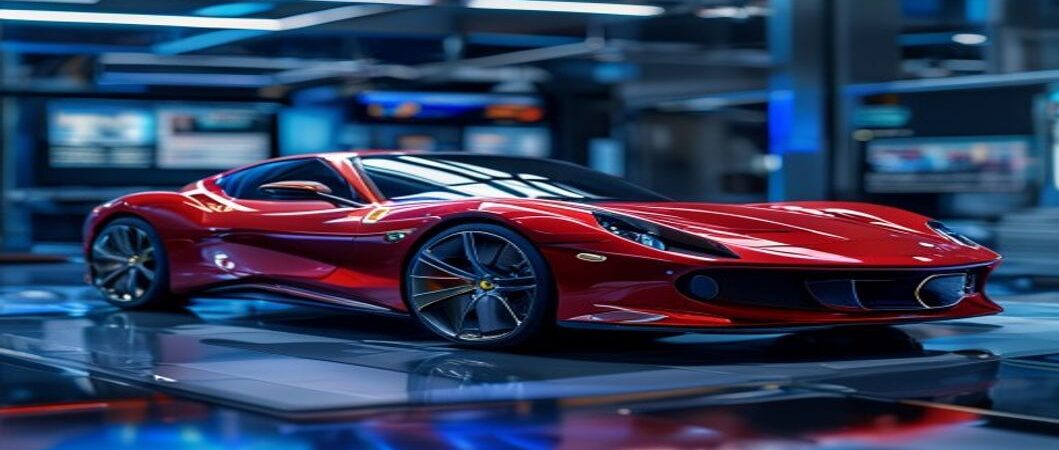
Remember when electric cars were just for nerds and early adopters? Well, the game’s changing, and even the most legendary names in performance are getting in on it. Ferrari, a brand synonymous with roaring engines and pure driving passion, just dropped some seriously good news on Wall Street, posting first-quarter results that blew past expectations. This isn’t just another quarterly report; it’s a signal. A signal that even the ultimate petrolheads are pivoting, and the future of the supercar is getting a serious electric jolt.
So, what does this mean for the Prancing Horse, for the automotive industry, and for us watching from the sidelines? Are they just dipping a toe into the EV pool, or is this the start of a full-blown electric revolution for Maranello? Let’s break down what’s happening, why it matters, and what to expect as Ferrari gears up for its own electric debut.
Ferrari’s Q1 Performance: More Than Just Pretty Cars
Alright, let’s cut to the chase. Ferrari (RACE) didn’t just meet Wall Street’s expectations for the first quarter of 2024; they absolutely smashed them. We’re talking about numbers that made analysts sit up and take notice, proving that even in a world grappling with economic uncertainties, demand for the ultimate automotive dream remains incredibly strong. When I think about running my own ventures, like my plant factory here in South Korea, seeing a company manage profitability this well, especially while navigating huge technological shifts, is genuinely impressive. It takes serious operational discipline.
The Numbers Don’t Lie
So, what exactly did they report? Net revenues jumped by a cool 10% year-over-year, hitting about €1.52 billion (that’s roughly $1.64 billion USD). Earnings before interest, taxes, depreciation, and amortization (EBITDA), a key metric for profitability, also saw a healthy increase. Shipments? Up 2% to 3,030 units. It wasn’t just one glowing number; it was a consistently strong performance across the board. They managed to sell more of their high-margin supercars, and the revenue per car went up. That’s the sweet spot for any business, really. In my soybean cooperative, we’re always looking at yield per hectare and profit margins per ton; Ferrari is doing the same, just with V12s instead of soybeans.
What’s Driving the Success?
Several factors are at play here. Firstly, the continued popularity of their existing lineup, particularly models like the Purosangue (yes, the four-door Ferrari, which has been a surprise hit) and the Roma, continues to drive sales. The brand’s exclusivity means they can command top dollar, and demand consistently outstrips supply for many of their special series models. People are willing to wait, and they’re willing to pay a premium. Secondly, Ferrari has been incredibly adept at managing its costs and maximizing profitability, even as it invests heavily in the future. They’re not just selling cars; they’re selling an experience, a status symbol, and that carries a lot of weight. It’s like how a perfectly grown, pesticide-free head of lettuce from my vertical farm can command a higher price in Seoul’s premium markets compared to what you might find at a discount store. Value is perceived, and Ferrari understands that better than almost anyone.
The Elephant in the Room: Ferrari’s EV Strategy
Now, let’s get to the big news that’s been brewing for a while: the electric Ferrari. For a brand built on the visceral thrill of a combustion engine, the move to electric is monumental. It’s not just about compliance; it’s about survival and evolution. Yet, Ferrari has taken its sweet time, unlike many competitors who jumped in headfirst. This deliberate approach seems to be paying off, as evidenced by their Q1 results, but the pressure is mounting.
Why Now?
The automotive world is shifting rapidly. Regulations are tightening globally, consumer preferences are evolving (even among the luxury set), and technological advancements in battery power and electric drivetrains are making EVs more compelling than ever. While Ferrari could probably squeeze a few more years out of its iconic V8s and V12s, delaying the EV transition indefinitely would be a death sentence. Their cautious approach was likely about ensuring their first electric offering wouldn’t just be ‘an electric car’ but a true Ferrari, delivering the performance, sound (yes, they’re working on artificial sound!), and emotional connection that defines the brand. It mirrors my own journey with smart agriculture – I didn’t rush into expensive IoT setups; I waited until the tech was reliable and the ROI made sense for my soybean farm.
The First Electric Ferrari: What We Know (and Don’t Know)
Details are scarce, and Ferrari is playing this close to the chest, as expected. What we do know is that their first fully electric model is slated for production to start sometime in 2025, possibly debuting late 2025 or early 2026. Rumors suggest it will be a sports car, not an SUV like the Purosangue. Crucially, Ferrari isn’t aiming for just *any* EV; they’re aiming for the best. Expect groundbreaking performance figures, innovative battery technology, and a price tag that will make even the most hardened hedge fund manager wince. They’ve invested heavily in a new manufacturing facility at their Maranello headquarters, dedicated to producing their electric vehicles. This isn’t a side project; it’s a core part of their future strategy. They’ve also patented new technologies for electric motors and sound simulation, indicating a serious commitment to making their EV feel and sound like a Ferrari. It’s like developing a new strain of soybean – you don’t just grow it; you invest in the research, the testing, and the specialized equipment to make it truly exceptional.
Wall Street’s Reaction: A Bullish Signal
The market loves a company that can execute, and Ferrari’s Q1 performance certainly demonstrated that. Beating analyst expectations doesn’t just boost the stock price in the short term; it builds confidence in the company’s long-term strategy, including its ambitious transition towards electrification. Real talk: in finance, consistency and exceeding targets is the name of the game. When a company like Ferrari shows it can still grow its core business while investing in a potentially disruptive future, investors tend to get excited.
Analyst Takeaways
Following the earnings report, several financial analysts reiterated their ‘buy’ ratings on Ferrari stock and, in some cases, raised their price targets. They pointed to Ferrari’s strong pricing power, robust order book, and effective management of the transition to hybrid and electric powertrains. The fact that they are generating significant cash flow from their current combustion-engine models gives them the financial runway needed to develop their EV technology without being forced into compromises. It’s a well-funded R&D department’s dream scenario.
Impact on Stock Performance
Ferrari’s stock (RACE) has generally performed well over the past year, and the strong Q1 results provided further positive momentum. While stock prices are subject to market volatility, a company consistently delivering strong financial results and having a clear, albeit cautious, vision for the future tends to be a favored investment. For those looking at the luxury automotive sector, Ferrari presents a unique case: a legacy brand with immense desirability that is navigating the EV transition with what appears to be a solid plan. It’s the kind of stability that’s attractive, much like the predictable yield and energy costs I’m working to achieve with my smart farming tech.
The Tech Behind the Prancing Horse (Electric Edition)
Let’s be clear: Ferrari isn’t just slapping an electric motor into an existing chassis and calling it a day. This is a ground-up reimagining. The challenge for any performance car manufacturer going electric isn’t just about making it fast; it’s about making it *feel* like their brand, and crucially, addressing the inherent limitations of current EV technology.
Battery Tech and Range Anxiety
Range anxiety is a real concern, especially for a brand whose cars are designed for thrilling drives, often far from charging stations. While Ferrari hasn’t released specs for their first EV, you can bet they’re working on battery technology that offers competitive range – likely aiming for well over 300 miles (480 km) on a single charge, perhaps even closer to 400 miles (640 km) for some variants. They’ll likely employ advanced battery management systems and potentially explore higher-density battery chemistries as they become viable. The charging speed will also be critical. Expect support for the fastest charging standards available. In my grow operation, precise control over nutrient delivery (akin to battery management) is key to crop health. Get it wrong, and the whole batch can suffer. Ferrari needs flawless execution on power delivery and charging.
Performance Redefined
This is where Ferrari traditionally shines, and they won’t compromise. Electric powertrains offer instantaneous torque, which is perfect for supercar acceleration. The challenge lies in replicating the driving dynamics and emotional feedback of a V12 or V8. Ferrari engineers are reportedly working on sophisticated systems to manage power delivery to each wheel independently, potentially offering torque vectoring far beyond what’s possible in a gasoline car. They’re also famously working on simulating engine sound – a crucial part of the Ferrari experience. Expect the electric Ferrari to be blindingly quick, handle like a dream, and offer a driving experience that, while different, is undeniably Ferrari. It’s about translating that raw power and responsiveness into a new medium. Think of it like adapting a traditional Korean recipe for a modern, health-conscious audience – you keep the soul of the dish but innovate with new ingredients and techniques.
Is the Electric Ferrari Worth the Hype (and Price)?
Let’s address the burning question: when Ferrari eventually launches its first EV, will it be worth it? This isn’t a simple yes or no. It depends entirely on what you value – and, of course, your bank account.
The Price Tag
If you’re asking about cost, prepare for sticker shock. The first electric Ferrari is expected to be one of the most expensive EVs on the market, likely starting well north of $300,000 USD, and potentially much higher depending on customization and specifications. This isn’t a mass-market EV; it’s a halo product designed to showcase technology, exclusivity, and performance. For context, the hybrid SF90 Stradale starts around $500,000. You’re paying for cutting-edge technology, unparalleled performance, brand prestige, and extreme rarity.
Beyond the Brand Name
So, is it *just* the badge? Partially, yes. Ferrari has cultivated an image and a level of engineering excellence that commands a premium. However, they are also investing heavily in developing unique EV technology. If they can deliver an electric supercar that genuinely rivals or surpasses the performance and driving experience of their gasoline counterparts, while offering innovative features and that distinctive Ferrari feel, then the price, while astronomical, might be justified for a certain clientele. It’s like the difference between buying standard rice for makgeolli versus using premium Icheon rice – the latter costs more, but the unique flavor profile and quality are undeniable. For the enthusiast collector or the ultimate performance seeker, the first electric Ferrari could be a groundbreaking piece of automotive history.
Alternatives in the Luxury EV Space
Ferrari isn’t operating in a vacuum. The luxury EV market is heating up, and there are already some serious contenders offering incredible performance and technology. If you’re looking for high-end electric motoring, you’ve got options.
The Established Players
Porsche Taycan: Arguably the benchmark for luxury electric performance sedans/wagons. The Taycan Turbo S offers blistering acceleration and Porsche’s renowned handling dynamics. It’s a more practical (relatively speaking) four-door option that feels sporty and refined. Prices range from around $90,000 for the base model up to over $190,000 for the Turbo S. 👉 Best: Porsche Taycan Turbo S for overall performance and driving feel in a luxury EV sedan.
Tesla Model S Plaid: While perhaps not as ‘luxury’ in the traditional sense as Ferrari or Porsche, the Model S Plaid offers mind-bending acceleration (0-60 mph in under 2 seconds) and a tech-forward interior at a significantly lower price point, typically starting around $90,000-$100,000. It’s a performance disruptor.
Lucid Air: The Lucid Air Dream Edition and Sapphire models boast incredible range (over 500 miles for some versions) and supercar-level horsepower, all wrapped in a sleek, luxurious sedan. Prices can push well over $200,000 for the top trims.
The Upstarts
Companies like Rimac (with the Nevera hypercar) are pushing the absolute boundaries of electric performance, creating hyper-exclusive, multi-million dollar machines that are faster than almost anything else on the planet. These are the hypercar equivalents of Ferrari’s future EV, often costing upwards of $2 million.
Pros and Cons: Embracing Electrification
- Pros:
- Environmental compliance and future-proofing the brand.
- Access to new performance capabilities (instant torque, precise control).
- Appealing to a new generation of wealthy buyers who may prefer EVs.
- Potential for innovative design and technology integration.
- Reduced reliance on fluctuating fossil fuel prices (though electricity costs matter!).
- Maintaining brand relevance in a rapidly changing automotive landscape.
- Leveraging existing brand loyalty and desirability for a new product category.
- Cons:
- Losing the iconic internal combustion engine sound and feel that defines Ferrari.
- Significant R&D investment required to match or exceed current performance.
- Potential brand dilution if the EV doesn’t live up to the Ferrari name.
- Higher initial production costs and complexity.
- Charging infrastructure dependency for owners.
- Perception challenges from traditionalists.
Getting Started with Ferrari (if you’re thinking investment)
If Ferrari’s strong Q1 performance and strategic pivot towards EVs have piqued your interest from an investment perspective, getting involved is relatively straightforward, though it requires careful consideration. Ferrari is a publicly traded company, and you can buy its stock through a standard brokerage account.
Steps:
- Open a Brokerage Account: If you don’t already have one, you’ll need to open an account with an online broker like Fidelity, Charles Schwab, E*TRADE, Robinhood, or others.
- Fund Your Account: Transfer money into your new brokerage account.
- Research Ferrari (RACE): Look up the ticker symbol ‘RACE’ on your broker’s platform. Review the company’s financial reports, analyst ratings, and news. Understand that this is a luxury brand navigating a tech shift, so volatility is possible.
- Place an Order: Decide how many shares you want to buy (or how much money you want to invest) and place either a market order (buy at the current best available price) or a limit order (buy only if the price reaches a specific level you set).
- Monitor Your Investment: Keep an eye on Ferrari’s performance, industry news, and broader market trends. Remember, investing in individual stocks carries risk.
It’s important to do your own research and consider consulting with a financial advisor before making any investment decisions. Investing in a company like Ferrari requires understanding both the allure of the brand and the practicalities of the automotive industry’s technological transformation.
Top Picks Comparison
| Feature | Ferrari (Future EV) | Porsche Taycan Turbo S | Lucid Air Sapphire | Tesla Model S Plaid |
|---|---|---|---|---|
| Est. Price Range | $300,000+ | $190,000+ | $250,000+ | $100,000+ |
| Est. 0-60 mph | Sub 2.5 sec (Speculation) | ~2.4 sec | ~1.9 sec | ~1.99 sec |
| Est. Range | 300+ miles (Speculation) | ~220 miles | ~400 miles | ~350 miles |
| Body Style | Likely Sports Car | Sedan/Wagon | Sedan | Sedan |
| Brand Focus | Ultimate Exclusivity & Performance | Sporty Luxury Driving Dynamics | Luxury, Range, Performance | Performance Tech Leader |
| Key Selling Point | Uncompromising Ferrari DNA in EV form | Porsche engineering, driving engagement | Extreme range and luxury | Raw acceleration, tech |
Our Top Recommendations
- 👉 Best Overall: Ferrari (Future EV): While not yet released, it’s poised to be the ultimate statement in luxury electric performance, blending brand heritage with cutting-edge tech.
- 👉 Budget Pick: Tesla Model S Plaid: Offers supercar-shattering acceleration and advanced tech at a fraction of the price of traditional luxury EVs.
- 👉 Premium Choice: Porsche Taycan Turbo S: Delivers a deeply engaging driving experience, exceptional build quality, and strong performance for those seeking a refined electric sports sedan.
Quick Checklist
- ✅ Monitor Ferrari’s (RACE) stock performance and news releases.
- ✅ Research the competitive landscape in the luxury EV market.
- ✅ Understand the long-term implications of electrification for automotive brands.
- ✅ Evaluate your personal risk tolerance for investing in individual stocks.
- ✅ Consider consulting a financial advisor for personalized investment strategies.
Frequently Asked Questions
What is Ferrari’s first electric car expected to be like?
Ferrari’s first fully electric vehicle is anticipated to be a high-performance sports car, focusing on delivering unparalleled speed, handling, and the emotional driving experience characteristic of the brand, adapted for an electric powertrain. Production is expected to begin in 2025.
How does Ferrari plan to make its EV sound like a Ferrari?
Ferrari has patented technologies for generating artificial engine sounds that mimic their iconic V8 and V12 engines. This is crucial for replicating the auditory feedback enthusiasts expect, even without a traditional combustion engine.
Is Ferrari’s strong Q1 earnings report an indicator for their EV success?
The strong Q1 earnings demonstrate Ferrari’s robust financial health and operational efficiency, providing a solid foundation and significant investment capital for their EV development. It signals market confidence in the brand’s ability to adapt and execute.
What are the main challenges for Ferrari in launching an EV?
Key challenges include replicating the visceral driving experience and engine sound of their gasoline cars, managing the high cost of developing cutting-edge EV technology, and overcoming potential skepticism from brand purists while meeting performance expectations.
How much will the first electric Ferrari likely cost?
While official pricing hasn’t been released, estimates place the cost of Ferrari’s first electric model well above $300,000 USD, positioning it as an ultra-luxury, exclusive vehicle comparable to or exceeding the price of their current top-tier hybrid models.
Final Thoughts
Ferrari’s Q1 performance wasn’t just about hitting financial targets; it was a powerful statement about their strategic foresight. By delivering strong results from their core business, they’ve secured the resources and market confidence needed to tackle the monumental task of electrifying their brand. The upcoming EV debut is more than just a new car; it’s the next chapter for an icon, and the market seems ready to cheer them on.
For investors and enthusiasts alike, Ferrari’s journey into the electric era is one to watch closely. While the challenges are significant—preserving brand soul in a new powertrain is no small feat—their methodical approach and financial strength suggest they’re positioned to make a formidable impact. Keep an eye on Maranello; the Prancing Horse is about to get a whole lot quieter, but likely no less thrilling.
🔗 Recommended Tools & Resources
- 📚 Best AI & Passive Income Books on Amazon
- ⚡ Download Our Free AI Automation Guides & Templates
- 📨 Join 10,000+ AI Money Makers — Free Weekly Newsletter
This post may contain affiliate links. We earn a small commission at no extra cost to you, which helps support our free content.