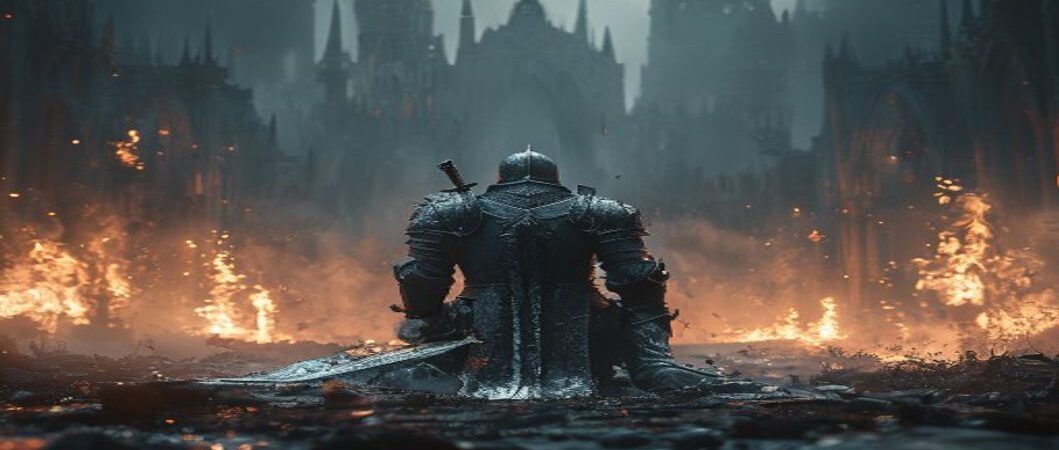
Alright, listen up, fellow Tarnished, Hunters, and Undead. If you’ve ever plunged into a FromSoftware game, you know the feeling. That mix of dread, frustration, and an almost addictive determination as you stare down a colossal, grotesque, or impossibly fast enemy. These aren’t just ‘boss fights’ in the traditional sense; they’re tests of patience, pattern recognition, and sometimes, your very sanity.
For eight years, I’ve been slinging pixels and dodging attacks across these brutal, beautiful worlds. And yeah, I’ve yelled at my screen more times than I care to admit. But there’s a reason we keep coming back, right? It’s for those moments when you finally, finally land that killing blow after countless attempts. That rush? Unbeatable. It’s like successfully automating a crop cycle in my plant factory after weeks of tweaking sensors and nutrient solutions – pure, unadulterated satisfaction.
Key Takeaways
- Research boss weaknesses before fighting.
- Optimize your build for stats, weapon scaling, and damage types.
- Don’t be afraid to summon allies (NPC or player).
- Learn attack patterns through observation, not just brute force.
- Take breaks! Frustration makes you sloppy.
- Upgrade your gear (weapons, armor, talismans) to the max.
What Makes a Soulsborne Boss Truly Legendary?
It’s not just about how many times they kick your butt. Sure, difficulty is a huge part of it, but there’s more. A truly great Soulsborne boss sticks with you. They become a story you tell, a nightmare you relive, or a triumph you brag about to anyone who’ll listen on Reddit.
Here’s what I look for beyond just pure health bars and damage:
- Fairness: They’re hard, but you always feel like it was *your* mistake, not the game’s. You learn. You adapt.
- Moveset Variety: No spamming one attack. They evolve, they surprise, they punish predictable play.
- Lore & Presentation: A boss isn’t just a HP sponge. Who are they? Why are they here? The music, the arena, the opening cinematic – it all matters.
- Visual Design: From grotesque horrors to majestic knights, a boss needs to look the part.
- The ‘Aha!’ Moment: That moment when the chaotic dance suddenly clicks, and you see the pattern. It’s like solving a puzzle. This is exactly what I aim for in my eco-friendly soybean farm – finding that perfect balance of nutrients and conditions for maximum yield. It’s a lot of trial and error, like finding the boss’s weakness.
- Player Engagement: Do they force you to use all your tools? To understand your build?
- Community Buzz: The bosses people talk about for years, the ones that spark endless debates on forums.
These criteria are what elevate a simple roadblock into an iconic moment in gaming history. They make these games, well, *these games*.


The Malenia Conundrum: When Difficulty Becomes a Debate
Let’s talk about Malenia, Blade of Miquella from Elden Ring. She’s legendary, no doubt. Probably the single most difficult Soulsborne boss for many, myself included. Her Waterfowl Dance attack alone has probably broken more controllers than any other move in gaming. But does being the hardest make her the best? Not necessarily.
The pros of bosses like Malenia are obvious: an immense challenge, a true test of skill, and an unforgettable victory if you manage it solo. The sense of accomplishment is off the charts. It pushes you to master every mechanic. It’s like finally getting my plant factory’s electricity costs under 40% of my operating budget – it takes constant optimization, brutal efficiency, and a lot of smart decisions.
The cons? Sometimes, that difficulty can feel a bit… cheap. Waterfowl Dance can feel like a ‘gotcha’ moment rather than a fair challenge, especially if you haven’t memorized the perfect dodge pattern. It can border on frustrating for frustration’s sake. Some players, myself included on a bad day, find it crosses the line from difficult to just plain annoying. It’s a fine line between a ‘hard but fair’ experience and one that feels like it’s just trying to waste your time.
Preparing for the Gauntlet: Smart Strategies & Builds
You wouldn’t go into an important smart agriculture meeting without your data sheets, would you? Same goes for Soulsborne bosses. Preparation is key, even for the most seasoned players.
Does Investing in Specific Builds Make Bosses ‘Cheaper’?
Absolutely. Think of it like this: in my plant factory, I can grow standard lettuce, or I can invest in specialized hydroponic systems and specific LED light recipes for high-value specialty crops. The latter is more efficient, yields better results, and makes the whole process ‘cheaper’ in terms of effort and resources per unit. For Soulsborne, a well-optimized build doesn’t just make bosses easier; it makes them more manageable, sometimes even ‘cheaper’ in terms of deaths and time spent.
- Stat Prioritization: Don’t spread yourself thin. Pick a damage stat (STR, DEX, INT, FAI, ARC) and pump it. Vigor/Endurance are always good investments.
- Weapon Scaling: Use weapons that scale well with your chosen stats. An unupgraded weapon with poor scaling will make any boss fight a nightmare.
- Damage Types: Some bosses are weak to specific damage types (Slash, Pierce, Strike, Fire, Magic, Lightning, Holy). Knowing this can turn the tide.
- Status Effects: Frostbite, Scarlet Rot, Bleed, Poison, Madness – these can utterly melt bosses if they’re susceptible. Bleed builds in Elden Ring, for instance, are notoriously powerful against many difficult foes.
- Summons/Ashes: Don’t be too proud! Spirit Ashes in Elden Ring, phantoms in Dark Souls – they’re there for a reason. They draw aggro, allowing you to get damage in. This is like having a perfectly tuned IoT system in my vertical farm that adjusts conditions autonomously – it frees me up for other tasks.
Gear, Spells, and the Right Mindset
Beyond your core build, specific gear and spell recommendations can save your hide. Facing a fire boss? Equip some fire-resistant armor and a shield. A magic user? Talismans or rings that boost magic defense are your friends. For spellcasters, finding that high-damage, low-cost spell that bosses are weak to is a game-changer.
But honestly, the biggest thing is your mindset. Take a breath. Observe. Don’t go in expecting to win on the first try. Each death is a lesson. Just like when I’m debugging an automation script for my mealworm fertilizer production – every failure tells me something new about what *doesn’t* work, getting me closer to what *does*.
My Definitive Top 10 Soulsborne Bosses Tier List
Alright, this is where things get spicy. Ranking the top 10 Soulsborne bosses is tough, and everyone has their own list. But based on my criteria – fairness, lore, design, moveset, and that sheer satisfaction factor – here are my picks. This isn’t just about the hardest Soulsborne bosses; it’s about the best overall experiences.
- 👉 Top pick: Slave Knight Gael (Dark Souls III: The Ringed City)
This guy is the ultimate test, the final boss of the entire Dark Souls saga, and he lives up to the hype. Three phases, each more desperate and epic than the last. He moves like a hunter, has incredible lore, and the arena is massive. Every single attack feels fair, yet demands precise timing. When I finally beat him after what felt like a hundred tries, it was pure, euphoric relief. No other boss encapsulates the grim beauty and challenge of Dark Souls quite like Gael. It’s like harvesting a record yield of premium Icheon rice for my makgeolli after a perfect growing season – hard-earned and incredibly rewarding. - Ornstein and Smough (Dark Souls)
The OG duo. This fight changed everything for me. You can’t just focus on one; you have to manage two entirely different movesets simultaneously. It’s brutal, requires strategic thinking, and the shift into the second phase (with the powered-up survivor) is iconic. Still talked about on Reddit years later. - Nameless King (Dark Souls III)
Two phases, both incredible. First, you fight him on a dragon, then directly. The dragon phase is a lesson in camera control and finding openings, while the second phase is a duel against a lightning-fast warrior who punishes greed. Visually stunning, too. - Lady Maria of the Astral Clocktower (Bloodborne: The Old Hunters)
A true hunter-on-hunter duel. Maria is fast, aggressive, and elegant. Her fight evolves beautifully with blood magic and then fiery attacks. This fight feels like a dance, a desperate, deadly ballet. No cheap tricks, just pure skill vs. skill. - 👉 Best Overall: Ludwig, the Holy Blade (Bloodborne: The Old Hunters)
Ludwig perfectly captures the transformation from grotesque beast to majestic knight. His first phase is pure, horrifying aggression. The second phase, with the Moonlight Greatsword, is a completely different beast – a more calculated, but no less deadly, duel. The music change is one of the best in gaming history. - Gehrman, the First Hunter (Bloodborne)
Another hunter duel, but with a tragic beauty. Gehrman is old, but impossibly quick and stylish. The fight is emotionally charged, especially when you realize his role. It’s a fitting capstone to Bloodborne’s incredible journey. - Malenia, Blade of Miquella (Elden Ring)
Yes, she’s here. Despite my earlier gripes about Waterfowl Dance, the sheer challenge and spectacle make her unavoidable on any ‘best’ list. The fight is a masterclass in aggression, and her healing mechanic forces you to play perfectly. For some, she IS the hardest Soulsborne boss, and beating her is a badge of honor. - Artorias the Abysswalker (Dark Souls: Artorias of the Abyss)
Noble, tragic, and utterly relentless. Artorias is a broken hero, corrupted by the Abyss, but his fighting spirit remains. His moveset is incredibly fun to learn, and the arena tells a story. He truly feels like a boss from a bygone era of heroism. - Soul of Cinder (Dark Souls III)
The amalgamation of all previous Lords of Cinder. This boss cycles through several iconic Dark Souls fighting styles, keeping you on your toes. The second phase, with Gwyn’s moveset and theme, is a powerful callback to the original game. A fantastic send-off to the Dark Souls series. - 👉 Value Pick: Sister Friede & Father Ariandel (Dark Souls III: Ashes of Ariandel)
This triple-phase fight is a brutal ballet. Friede is fast and invisible, Father Ariandel is a michigan-farm-town-voted-down-plans_02121794236.html” class=”auto-internal-link”>giant tank, and then they team up. The third phase, where Friede gets truly unleashed, is a breathtaking display of frost and scythe mastery. It’s a long, exhausting, but ultimately incredibly satisfying fight.
The ‘Worst’ Soulsborne Bosses? (Yeah, We’ve All Got ‘Em)
Not every boss can be a masterpiece. Some are just… clunky. For me, the ‘worst’ Soulsborne bosses often share a few traits: bad camera angles, overly large hitboxes that don’t make sense, or just being plain boring. The Bed of Chaos from Dark Souls 1 is a common offender, more of a platforming puzzle than a fight, and usually results in cheap deaths. The Royal Rat Authority from Dark Souls 2? Just a frustrating gank squad with little reward. Sometimes, a boss fight feels less like a challenge and more like a chore, taking away from the overall enjoyment of these incredible games.
Beginner’s First Step: Which Game Has Iconic Bosses for Newbies?
Want to dip your toes into the Soulsborne world but don’t want to start with Malenia? I get it. While no Soulsborne game is truly ‘easy,’ some are more forgiving for beginners.
I’d actually recommend Dark Souls III. It has a faster pace than DS1, but isn’t as relentlessly aggressive as Bloodborne or as sprawling as Elden Ring. The combat feels fluid, and while it has some incredibly tough bosses (like Gael and Friede), many early bosses are great teachers without being absolute walls. Its boss roster is fantastic, giving you a taste of everything that makes Soulsborne boss fights so compelling.
Elden Ring is also surprisingly accessible for beginners due to the open-world nature and spirit summons, allowing you to over-level or try different strategies. However, the sheer scale can be overwhelming.
How Do Bosses Compare Across Games? DS, Bloodborne, Elden Ring
Each FromSoftware series has its own flavor when it comes to boss design, often reflecting the overall game’s mechanics and lore. Here’s a quick rundown:
| Game Series | Boss Philosophy | Key Characteristics |
|---|---|---|
| Dark Souls (1-3) | Strategic, pattern-based, often larger-than-life foes. Rewards patience and shield use. | Deliberate movement, emphasis on stamina management, environmental awareness. Often tragic or grand lore. |
| Bloodborne | Aggressive, fast-paced, rewards offense over defense. Focus on visceral attacks. | High mobility, quick dodges, rally mechanic encourages trading hits. Often grotesque, beastly, or tragic humanoids. |
| Elden Ring | Hybrid of Dark Souls and Bloodborne, often with multiple phases and highly aggressive movesets. Utilizes spirit ashes. | Faster and more complex attack chains, wider range of damage types, open-world freedom to tackle in any order. Grand, epic scale. |
| Sekiro (Honorary Soulsborne) | Rhythm-based, posture-focused combat. Rewards perfect deflections and aggression. | Fast and fluid, focus on swordplay, limited healing. Humanoid and beast bosses require intense focus on parrying. |
Elden Ring really mashed up the best of both worlds, throwing in more complex attack sequences and the ability to choose your challenge with its open world. Dark Souls is the slow, methodical chess game. Bloodborne is the frantic, blood-soaked dance. Sekiro is the precise, rhythmic martial arts duel. They all offer incredible boss battles, just with different rhythms.
Frequently Asked Questions
What are the top 10 Soulsborne bosses?
My top 10 list includes Slave Knight Gael, Ornstein & Smough, Nameless King, Lady Maria, Ludwig the Holy Blade, Gehrman, Malenia, Artorias, Soul of Cinder, and Sister Friede. These bosses are chosen for their challenge, lore, design, and overall impact.
Is there a definitive Soulsborne boss tier list?
No definitive tier list exists, as preferences vary greatly among players. However, common contenders for top spots often include bosses like Malenia, Slave Knight Gael, Ludwig, and Orphan of Kos due to their exceptional difficulty, intricate design, and memorable experiences.
Who are the hardest Soulsborne bosses?
Malenia, Blade of Miquella (Elden Ring) is widely considered the hardest Soulsborne boss, often cited by players on Reddit. Other notoriously difficult bosses include Orphan of Kos (Bloodborne), Isshin, the Sword Saint (Sekiro), and Slave Knight Gael (Dark Souls III).
What are the worst Soulsborne bosses?
The ‘worst’ Soulsborne bosses are generally those with unfair mechanics, poor camera control, or boring designs. Common examples include Bed of Chaos (Dark Souls), Royal Rat Authority (Dark Souls II), and Prowling Magus & Congregation (Dark Souls II) for their frustrating or uninspired fights.
Does investing in specific builds make it ‘cheaper’ (easier/faster) to beat top Soulsborne bosses?
Yes, absolutely. Optimizing your build with appropriate stats, weapon scaling, damage types, and status effects can significantly reduce the difficulty and time spent on challenging bosses. It’s about strategic preparation to make the fight more manageable and efficient.
🔗 Recommended Resources
- 📚 Best Ai Automation Tools 2026 on Amazon
- ⚡ Get Our AI Automation Templates & Guides
- 📨 Join Our Free AI Money Newsletter (Weekly)
This post contains affiliate links. We may earn a commission if you purchase through these links, at no extra cost to you.