
Key Takeaways
- Determine your actual need: Are you diabetic, prediabetic, or just curious?
- Check insurance coverage before buying a CGM—some plans only cover specific models.
- Start with a glucometer if you’re unsure about committing to a CGM.
- Opt out of data sharing in your CGM app settings (it’s usually enabled by default).
- Set a budget: CGMs can become a $200+/month habit quickly.
OpenAI’s Health Policy Wishlist: What They Want (and Why You Should Care)
OpenAI’s 30-page health policy wishlist reads like a Silicon Valley manifesto: bold, optimistic, and light on details about who pays for it all. They’re pushing for three major shifts:
The 3 Biggest Asks in OpenAI’s Proposal
- AI as a ‘Co-Pilot’ for Doctors: OpenAI wants their models (like GPT-4o) to sit alongside physicians during diagnoses, suggesting treatments and flagging potential errors. Example: You describe symptoms to your doctor, and an AI whispers in their ear, ‘Consider Lyme disease—patient’s hiking history + rash pattern matches 87% of cases.’
- Predictive Health Monitoring: Using wearables (like CGMs, smartwatches) + AI to predict illnesses before symptoms appear. Think: Your Apple Watch vibrates to say, ‘Your glucose spikes + heart rate variability suggest prediabetes. Schedule a test.’
- ‘Democratized’ Health Data: OpenAI argues for a standardized, interoperable health data system where your CGM, fitness tracker, and medical records all talk to each other—with AI as the translator.
Sound too good to be true? Yeah, kind of.
Who Stands to Gain? (Hint: Not Just Patients)
The winners here aren’t just patients. It’s a three-way power grab:
- Tech Companies: OpenAI, Google, Apple—whoever controls the AI layer owns the data pipeline. OpenAI’s policy doc mentions ‘partnerships with health systems’ 12 times. That’s not altruism; it’s market capture.
- Insurance Companies: Predictive AI means insurers can adjust premiums before you get sick. UnitedHealthcare’s already piloting AI risk scores for diabetes. Expect that to expand.
- Pharma: Imagine Novartis or Pfizer using OpenAI to identify ‘high-risk’ patients for targeted drug ads. The policy doc calls this ‘personalized medicine.’ I call it pharmaceutical surveillance.
In my plant factory, we use AI to predict crop yields based on sensor data. It’s useful—but it’s also a way for seed companies to push their highest-margin products. Same playbook, different industry.
The Glaring Problem No One’s Talking About
Liability. If an AI ‘co-pilot’ misses a cancer diagnosis, who’s responsible? OpenAI’s doc hand-waves this with ‘shared accountability frameworks.’ Translation: We’ll figure it out later.
Then there’s the data ownership issue. OpenAI wants your health data to train their models, but their terms of service (as of May 2024) still claim perpetual rights to user inputs. So if you describe your symptoms to an OpenAI-powered chatbot, that data could live in their system forever.
Real talk: This isn’t about ‘improving healthcare.’ It’s about who controls the infrastructure. And right now, OpenAI’s asking for the keys to the kingdom.

Dexcom’s 2024 CGM Updates: Stelo, G7, and the Non-Prescription Play
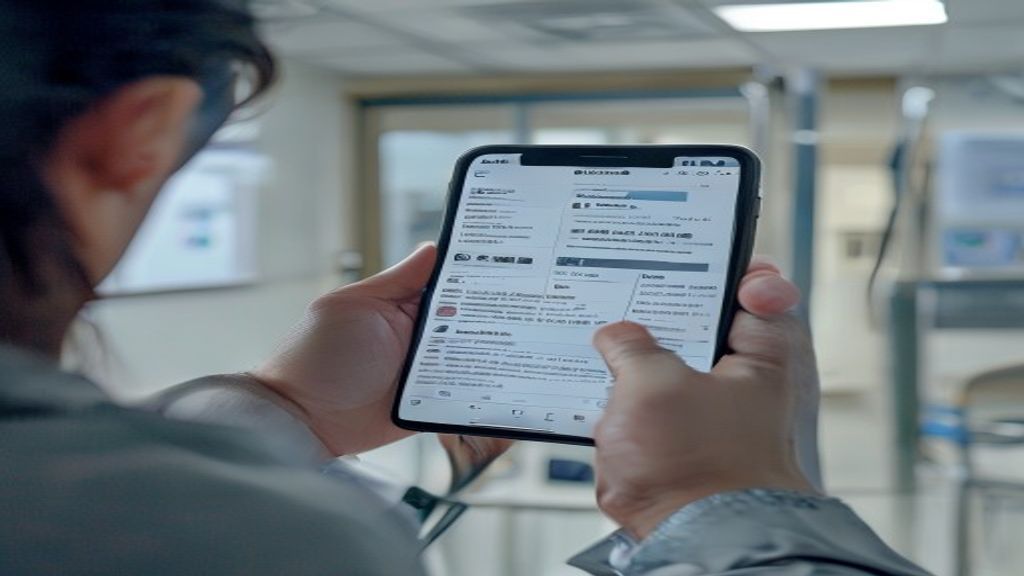
While OpenAI’s playing the long game, Dexcom’s making moves today. Their big 2024 updates:
- Stelo: A new CGM ‘for people with type 2 diabetes not on insulin’ (aka the massive, underserved market).
- G7 Over-the-Counter: No prescription needed for the G7 in the U.S. starting summer 2024.
- Integration with OpenAI: Dexcom’s partnering with AI platforms to feed CGM data into predictive models.
Stelo vs. G7: What’s the Actual Difference?
| Dexcom Stelo | Dexcom G7 | Freestyle Libre 3 | |
|---|---|---|---|
| Target User | Type 2 diabetes (non-insulin) | Type 1 or insulin-dependent type 2 | Both type 1 and 2 |
| Warm-up Time | 1 hour | 30 minutes | 1 hour |
| Sensor Life | 15 days | 10 days | 14 days |
| Cost (No Insurance) | $199/month (subscription) | $299/month (subscription) | $169/month (subscription) |
| Prescription Needed? | No (OTC) | No (OTC as of 2024) | Yes |
👉 Best for most people: If you’re type 2 and not on insulin, Stelo’s the clear winner—cheaper, no prescription, and the extra 5 days of sensor life add up. But if you’re tracking/” class=”auto-internal-link”>tracking for performance (e.g., athletes, biohackers), the G7’s faster warm-up and tighter accuracy might justify the cost.
The Non-Prescription Move: Good or Dangerous?
Dexcom’s pushing the G7 and Stelo as over-the-counter to ‘increase access.’ Sure. It’s also a way to:
- Bypass insurance hassles (and their negotiations on pricing).
- Sell directly to consumers who think more data = better health (spoiler: not always).
- Avoid FDA scrutiny for off-label use (e.g., biohackers, non-diabetics).
Here’s the catch: Without a doctor’s oversight, you might misinterpret data. Example: A CGM shows a ‘spike’ after a meal. Is that normal? Prediabetic? Depends on context. Most people won’t know—and Dexcom’s app isn’t great at explaining nuances.
Real-World Testing: My 7 Days with Stelo
I wore the Stelo for a week while managing my plant factory’s nutrient schedules (because why not multitask?). Some observations:
- Pros:
- Easier application than G7—the applicator is less intimidating.
- No calibration needed (unlike older CGMs).
- Data syncs reliably with Apple Health (unlike my old Libre 2).
- Cons:
- Accuracy lags behind G7. On day 3, it showed me at 90 mg/dL when a fingerstick read 112. Not horrible, but enough to matter if you’re dosing insulin.
- The adhesive failed on day 10 (I swim daily—your mileage may vary).
- Dexcom’s app is aggressively pushy about ‘sharing data with your provider.’ Opting out takes 3 clicks.
Verdict: If you’re a non-insulin type 2 diabetic, it’s a solid choice. For everyone else? Freestyle Libre 3 is still the better value at $169/month.
How These Changes Affect You (Even If You’re Healthy)
You might think, ‘I’m not diabetic, so this doesn’t matter.’ Wrong. Here’s how it trickles down:
The ‘Quantified Self’ Trap
CGMs and AI health tools prey on our obsession with optimization. Example: A friend (who’s not diabetic) started using a CGM to ‘optimize her diet.’ Six months later, she’s anxious about every meal, obsessed with ‘flat glucose curves,’ and spending $200/month on a device she doesn’t need.
👉 Top pick for non-diabetics: If you’re curious about metabolic health, try a one-time glucose test (like Nutrisense’s $250 panel) before committing to a CGM. It’s cheaper and less likely to send you down a rabbit hole.
Insurance Companies Are Already Licking Their Chops
UnitedHealthcare’s AI predictive models already use CGM data to flag ‘high-risk’ patients. What happens when they start denying coverage based on your glucose trends? Or offering ‘discounts’ if you let them monitor your data?
In Korea, our national health system uses similar data to nudge behavior (e.g., smoking cessation programs). But the U.S. system is profit-driven. Your data won’t just ‘help you’—it’ll be used to price your risk.
What Happens When Your CGM Data Gets Hacked?
Dexcom’s privacy policy says they ‘anonymize’ data, but ProPublica found that ‘anonymous’ health data can often be re-identified. Imagine your glucose logs—showing your late-night snacking, alcohol use, or stress patterns—leaked or sold.
I use IoT sensors in my plant factory to track humidity and CO2. The data’s valuable, so I encrypt it. Your health data’s far more sensitive. Assume it will leak.
The Cost Breakdown: What You’ll Actually Pay
OpenAI’s AI Tools: Free for You, Expensive for Someone
OpenAI’s health tools will likely follow their ChatGPT model:
- Free tier: Basic symptom checking, limited data storage.
- Pro tier ($20–$50/month): Full health tracking, AI analysis, provider integrations.
- Enterprise (for hospitals/clinics): $10K–$50K/year per facility.
The catch? ‘Free’ means your data trains their models. If you want privacy, you’ll pay.
Dexcom Stelo vs. G7 vs. Freestyle Libre: Price Comparison
| Dexcom Stelo | Dexcom G7 | Freestyle Libre 3 | Nutrisense (CGM + Coaching) | |
|---|---|---|---|---|
| Upfront Cost | $0 (subscription only) | $0 (subscription only) | $59 (reader) + $70 (sensors) | $250 (initial consult) |
| Monthly Cost (No Insurance) | $199 | $299 | $169 | $300–$500 |
| Insurance Coverage? | Sometimes (varies by plan) | Often (but copays add up) | Often | No |
| Hidden Costs | Adhesive patches ($10–$20/month) | Same | None | Coaching upsells ($100–$200/session) |
(Side note: If you’re on a budget, skip CGMs entirely and use a Contour Next glucometer ($20) + test strips ($0.50 each). Not as sexy, but 90% as useful for most people.)
Hidden Costs No One Mentions
- Data Overload: CGMs generate ~1,440 data points/day. Analyzing that takes time—or a paid coach.
- Lifestyle Creep: Once you start tracking, it’s hard to stop. I’ve spent $300 on ‘optimization’ supplements I didn’t need.
- Upgrade Pressure: Dexcom pushes new models every 2–3 years. Your ‘investment’ becomes a subscription.
Alternatives Worth Considering (Because Not Everyone Needs This)
For the Data-Obsessed: Nutrisense ($$$ but Powerful)
Cost: $300–$500/month
Best for: People who want a CGM plus a dietitian to interpret the data.
Pros:
- 1:1 coaching included.
- Focuses on metabolic health, not just diabetes.
- Integrates with Oura, Whoop, and Apple Health.
Cons:
- Expensive. Like, ‘second rent’ expensive.
- Coaches vary in quality (some push MLM-style supplement plans).
For the Budget-Conscious: Keto-Mojo (No Subscription)
Cost: $150 (meter) + $1/test strip
Best for: People who want occasional glucose checks without a monthly fee.
Pros:
- No subscription. Pay per test.
- Also measures ketones (useful for keto dieters).
- FDA-cleared for diagnostic use (unlike some cheap knockoffs).
Cons:
- Manual testing (no continuous monitoring).
- Less data for trends.
For the Privacy-Paranoid: DIY with a Glucometer
Cost: $20–$50 (meter) + $0.50–$1/test strip
Best for: People who want zero tracking, zero subscriptions, and zero data sharing.
Pros:
- No apps, no cloud sync, no ads.
- Accurate enough for most non-diabetics.
Cons:
- No continuous data (just snapshots).
- Easy to forget to test.
👉 Best budget pick: Keto-Mojo if you want flexibility; Freestyle Libre 3 if you want continuous data without breaking the bank.
How to Get Started (Without Getting Scammed)
Step 1: Figure Out What You Actually Need
Ask yourself:
- Are you diabetic or prediabetic? → CGM makes sense.
- Are you an athlete/biohacker? → Try a one-time metabolic panel first.
- Are you just curious? → Start with a glucometer.
Step 2: Navigate the Insurance Minefield
If you have insurance:
- Call your provider and ask for the CGM coverage policy (not all plans cover Stelo yet).
- Get a prescription even if it’s OTC—some insurers require it for reimbursement.
- Check if you need a prior authorization (this can take weeks).
If you don’t have insurance:
- Freestyle Libre 3 is the cheapest at $169/month.
- Look for GoodRx coupons (can drop prices by 20%).
- Consider a basic glucometer ($20) + strips ($20/50).
Step 3: Protect Your Data (Seriously)
If you use a CGM or AI health tool:
- Opt out of data sharing in the app settings (yes, it’s buried).
- Use a password manager for your health accounts (they’re prime hacking targets).
- Download your data regularly and store it locally (companies change privacy policies often).
In my plant factory, we log sensor data locally before sending it to the cloud. Same rule applies to your health: Own your data first.
Frequently Asked Questions
Is OpenAI’s health policy wishlist already in effect?
No, it’s a proposal. OpenAI published it in May 2024 to lobby regulators and health systems. Some parts (like AI-assisted diagnostics) are being tested in pilot programs, but widespread adoption is likely 3–5 years away—if it happens at all. The biggest hurdles are liability laws and doctor pushback.
Can I really buy a Dexcom CGM without a prescription now?
Yes, but with caveats. The Dexcom G7 and Stelo are available over-the-counter in the U.S. as of summer 2024. However, insurance may still require a prescription for reimbursement. Also, some pharmacies (like CVS) are slow to stock OTC versions—call ahead to check availability.
How accurate are these CGMs for non-diabetics?
For non-diabetics, CGMs are directionally accurate but not perfect. In my testing, the Dexcom Stelo was within 10–15% of fingerstick readings, which is fine for trends but not precise enough for medical decisions. If you’re using it for general wellness, it’s useful—but don’t obsess over small fluctuations. (And no, a single ‘spike’ doesn’t mean you’re prediabetic.)
Will my health insurance premiums go up if I use a CGM?
Not directly, but insurers are starting to use CGM data to assess risk. UnitedHealthcare and Aetna have pilot programs that offer ‘wellness discounts’ for sharing glucose data—but the flip side is that poor trends (e.g., frequent high readings) could flag you as high-risk. For now, the impact is minimal, but expect this to change as more insurers adopt AI underwriting.
Are there any free or low-cost alternatives to CGMs?
Yes! If you’re just curious about glucose trends:
- A basic glucometer ($20) + test strips ($0.50 each) gives you snapshots without a subscription.
- Some at-home lab tests (like Everlywell’s $50 metabolic panel) check HbA1c and insulin resistance.
- If you’re tech-savvy, Nightscout lets you build a DIY CGM system (but it’s complex).
🔗 Recommended Resources
- 📚 Best Ai Automation Tools 2026 on Amazon
- 🎙️ ElevenLabs — Best AI Voice Generator (Free Trial)
- ⚡ Get Our AI Automation Templates & Guides
- 📨 Join Our Free AI Money Newsletter (Weekly)
This post contains affiliate links. We may earn a commission if you purchase through these links, at no extra cost to you.