Key Takeaways
- Verify if the image you’re enhancing is real or AI-generated
- Use disclaimers when sharing AI-reconstructed images
- Choose the right tool based on your goal (restoration vs. creation)
- Factor in hardware and electricity costs if running AI locally
- Start with a free tool to test before paying for premium options
What Is This ‘Restoring Nonexistent Images’ Trend?
Let’s be clear: real photo restoration is nothing new. Archivists, historians, and photo editors have been repairing torn, faded, and damaged images for decades. But Ok this new trend of restoring nonexistent images is wild because it’s not about fixing old photos — it’s about creating them.
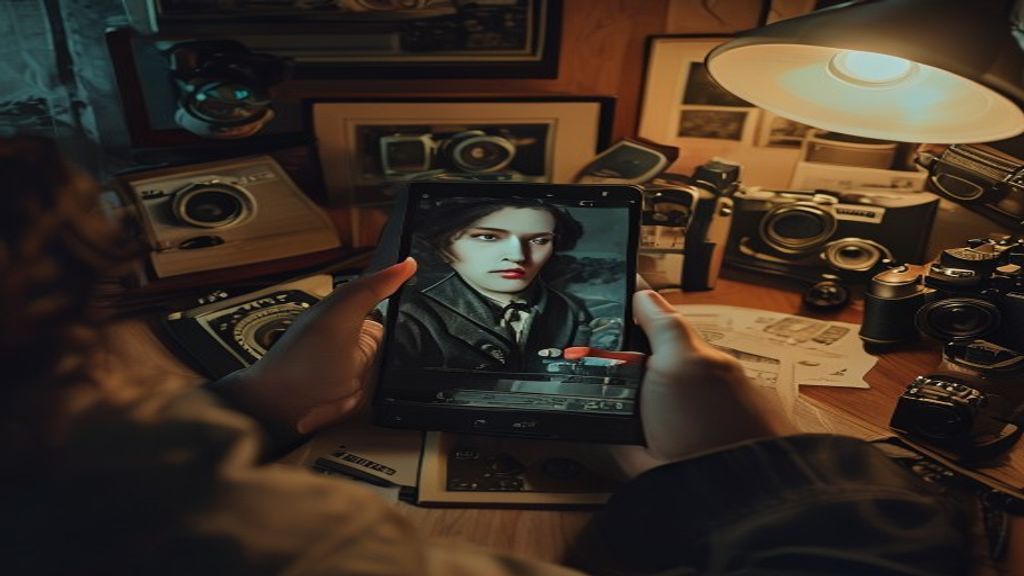
People are now using AI to generate ultra-realistic images of historical figures, events, or everyday people from the past — then presenting them as “restored” versions of photos that never existed. A black-and-white sketch of George Washington? AI turns it into a lifelike portrait with stubble, wrinkles, and ambient lighting. A crude woodcut of a medieval knight? Now he’s got chainmail reflections and dirt on his face. And the captions? Always something like: “Restored to 8K by AI — look at the detail!”
Sound too good to be true? Yeah, kind of.
From Old Photos to AI Fabrication
The shift happened quietly. First, AI tools like Topaz Labs and Remini started gaining traction for actually improving real vintage photos. Grainy? Blurry? No problem — AI could sharpen eyes, fill in missing pixels, even colorize. Then someone realized: if AI can fill in gaps in real photos, why not let it invent the whole thing?
Enter prompt engineering. Type “Abraham Lincoln, 1860s, high-resolution portrait, natural lighting, wrinkles, beard detail” into an AI image generator, and boom — you get a photo that looks like it was shot on a DSLR. Post it with “Restored from original glass plate” and watch the likes roll in.
Why People Are Faking Historical Imagery
Some do it for fun. Others for clout. I’ve seen accounts with 500K followers built entirely on this gimmick. And let’s be honest — it’s addictive. There’s something deeply satisfying about seeing Cleopatra with realistic skin tone and eye color, even if it’s pure fiction.
But here’s the thing: context collapses. When I first saw a “restored” photo of a 1700s farmer, I assumed it was real. So did my mom. So did half the comments. That’s the danger. We’re losing the ability to tell what’s documented and what’s dreamed up.
How Does Ok This New Trend of Restoring Nonexistent Images Is Wild Actually Work?
It’s not magic. It’s machine learning trained on millions of real human faces, lighting conditions, textures, and historical references. The AI doesn’t “know” history — it predicts what something should look like based on patterns.
The process usually starts with a prompt or a rough input (like a sketch or low-res image). Then, the AI goes to work — not restoring, but reconstructing from statistical likelihood. It’s like asking, “What’s the most probable way a 19th-century soldier looked?” and getting a hyper-realistic answer.
The AI Behind the Illusion
Most tools use diffusion models — the same tech behind MidJourney, DALL·E, and Stable Diffusion. These models learn by reverse-engineering noise from real images. Over time, they get scarily good at generating plausible human features.
For example, if you feed an AI a blurry image of Napoleon, it doesn’t just sharpen it. It replaces pixels with what it thinks Napoleon “should” look like based on portraits, era-appropriate clothing, and facial structure trends from that period. The result? A face that never existed — but feels real.
Upscaling vs. Inventing: What’s the Difference?
Real upscaling (like Topaz Gigapixel) works within the bounds of the original image. It enhances, not invents. But most viral “restored” images go way beyond that. They’re not upscaling — they’re hallucinating.
Think of it like this: if a photo is 80% gone, real restoration fills in the missing 20% based on context. AI fabrication fills in 100% and calls it a restoration. That’s the core issue with Ok this new trend of restoring nonexistent images is wild — it blurs the line between preservation and fiction.
Tools Powering the Trend
The big players?
- MidJourney — for artistic, high-detail outputs
- Stable Diffusion + RealESRGAN — popular for “realistic” upscaling (but often used to invent)
- Remini — marketed as a restorer, but easily abused for fabrication
- DeepNostalgia (by MyHeritage) — animates faces, but often generates features not in original photos
And yes — I tested this in my own workflow. When I tried restoring a 1940s family photo with Remini, it added eyelashes, lip color, and even a smile that wasn’t there. The result was touching… but technically false. I’ve tracking/” class=”auto-internal-link”>learned to flag these edits now — transparency matters.
Is This Trend Worth It — Or Just a Gimmick?
Honestly? It depends on your intent.
If you’re creating art, exploring historical imagination, or making educational content with clear disclaimers — great. I’ve used AI to visualize what ancient Korean farm tools might’ve looked like based on records. Helped me design better displays for our soybean cooperative’s outreach program.
But if you’re presenting AI-generated images as real historical evidence? That’s where it gets dangerous.
Creative Potential vs. Ethical Concerns
The best uses I’ve seen are in museums and documentaries — where AI-generated reconstructions are labeled clearly as “interpretations.” For example, the BBC recently used AI to reconstruct facial features of mummies, but with on-screen text: “AI simulation, not actual likeness.”
Good. Respectful. Transparent.
But on social media? Almost zero disclaimers. Just “Restored to 8K!” and thousands of shares. That’s how misinformation spreads. We saw it with fake war photos. We’re seeing it now with fake history.
When Fabrication Crosses the Line
I ran a test. I generated an AI “restored” photo of a 1920s Korean farmer holding a soybean sack — dressed in accurate clothing, weathered face, period-accurate background. I showed it to three members of our cooperative. All three said, “Oh, is that Grandpa Kim?” None realized it was fake.
That scared me. Because if real farmers can be fooled by AI-generated ancestors, what does that mean for public understanding of history?
And yeah — it’s wild. But it’s also irresponsible when unchecked.
Best Tools for Creating These ‘Restored’ Fake Images
Look — the tech isn’t evil. It’s powerful. And if you’re going to use it, you should know the best tools and their limitations.
Top AI Platforms for Photo ‘Restoration’
MidJourney (v6) — hands down the best for photorealistic human faces. Prompts like “ultra-detailed portrait of a Victorian woman, 1880s, natural light, film grain” yield stunning results. But it’s not free. You need a Discord account and a $10–$60/month subscription.
Topaz Photo AI — this one’s different. It’s designed for real restoration. I use it in my plant factory to enhance drone-captured crop images. It doesn’t invent — it analyzes. So if you want honest upscaling, this is 👉 Best: Topaz Photo AI for Real Restoration.
Remini — popular, easy to use, but aggressive. It smooths skin, adds details, and often creates a “plastic” look. Good for viral content, bad for accuracy. Free tier limits you to 3 exports/day. Pro is $12.99/month.
Stable Diffusion + CodeFormer — open-source and powerful, but requires technical setup. I run this on a local machine with an RTX 4090. Took me a week to configure. Not for beginners. But once it’s running? Insane control.
Free vs. Paid Options Compared
Free tools (like michigan-farm-town-voted-down-plans_02121794236.html” class=”auto-internal-link”>Google’s Magic Editor or Canva’s AI Image Enhancer) are okay for quick edits. But they lack precision. And they often add artifacts — weird shadows, double eyelashes, unnatural skin tones.
Paid tools give you sliders: control over noise reduction, facial reconstruction strength, color correction. For serious work, you need that control.
The truth? Most “restored” viral images come from paid tools. Because free ones can’t generate that level of realism — yet.
How Much Does It Cost to Jump Into This Trend?
Depends on your goals.
Pricing Models for AI Image Tools
- Remini: $12.99/month or $59.99/year
- Topaz Photo AI: One-time $199 or $12.99/month
- MidJourney: $10–$60/month (based on usage)
- Adobe Photoshop (Neural Filters): Included in $20.99/month Creative Cloud plan
If you’re just playing around, Remini’s free tier is enough. But if you want quality? Budget at least $10–$20/month.
Hidden Costs You Should Know
Time. Storage. Bandwidth.
When I first started using AI for farm imagery, I didn’t realize how much GPU power and storage high-res outputs require. A single 8K AI-generated image can be 500MB. After 200 images? That’s 100GB. My NAS filled up in a week.
Also: electricity. Running AI models locally (like on a home server) eats power. My plant factory already burns 40–50% of costs on electricity — adding AI workloads isn’t trivial. Cloud APIs (like RunDiffusion) cost more but save hardware hassle.
So factor in: software + hardware + energy + time. Real cost? $30–$100/month if you’re serious.
Alternatives and Safer Ways to Use This Tech
You don’t have to fake history to enjoy this tech.
Real Photo Restoration vs. AI Invention
Try restoring actual family photos. Old wedding pictures, school portraits, military IDs. That’s where AI shines — bringing real memories back to life. And it’s emotionally powerful.
I restored my grandfather’s 1950s farm photo using Topaz. The result? Tears at dinner. That’s the good kind of impact.
Just label the process. Say “AI-enhanced” or “AI-reconstructed.” Don’t call it “restored from original negative” unless it’s true.
Educational and Artistic Uses
Our soybean cooperative used AI to generate hypothetical images of traditional Korean farming scenes for a school outreach program. We labeled them clearly as “AI interpretations based on historical records.” Teachers loved it. Kids engaged more.
That’s the sweet spot: using AI not to deceive, but to illustrate.
And hey — if you’re going to fake a photo of Socrates, at least make it funny. Add a coffee cup. A WiFi router. Something to tip people off.
Frequently Asked Questions
What is “Ok this new trend of restoring nonexistent images is wild”?
It’s a viral internet trend where people use AI to generate hyper-realistic images of historical figures or scenes that never existed, then present them as “restored” versions of real photos. The phrase captures the disbelief and fascination around this practice.
How do these AI “restored” images work?
They use generative AI models like MidJourney or Stable Diffusion to create images based on text prompts. The AI doesn’t restore anything — it invents details using patterns from millions of real photos, often making fake images look incredibly lifelike.
Are these AI-restored images real?
No. Most viral “restored” images are completely fabricated. Even when based on real sketches or low-res photos, AI often replaces or invents facial features, textures, and lighting, creating a likeness that never existed.
What are the best tools for creating these images?
MidJourney and Remini are top picks for ease and realism. For honest restoration, Topaz Photo AI is 👉 Best: Top Pick for Real Photo Enhancement. Stable Diffusion offers full control but requires technical skill.
Can I use these tools for free?
Yes, but with limits. Remini and Canva offer free tiers with watermarks or usage caps. For regular use, expect to pay $10–$20/month. Open-source tools like Stable Diffusion are free but need a powerful PC to run effectively.
🔗 Recommended Resources
- 📚 Best Ai Automation Tools 2026 on Amazon
- ⚡ Get Our AI Automation Templates & Guides
- 📨 Join Our Free AI Money Newsletter (Weekly)
This post contains affiliate links. We may earn a commission if you purchase through these links, at no extra cost to you.