
Key Takeaways
- Audit your current energy usage with smart meters
- Identify peak demand charges in your utility bill
- Evaluate AI platforms that integrate with your existing systems
- Start with a pilot project (e.g., one building or line)
- Monitor ROI and scale based on results
AI and the Smart Grid: A New Era of Energy Management
When I first set up my grow racks, I thought a timer on the LEDs was “smart.” Then I realized I was wasting energy every night—lights on, no growth happening. That’s when it hit me: real intelligence means adaptation, not schedules.
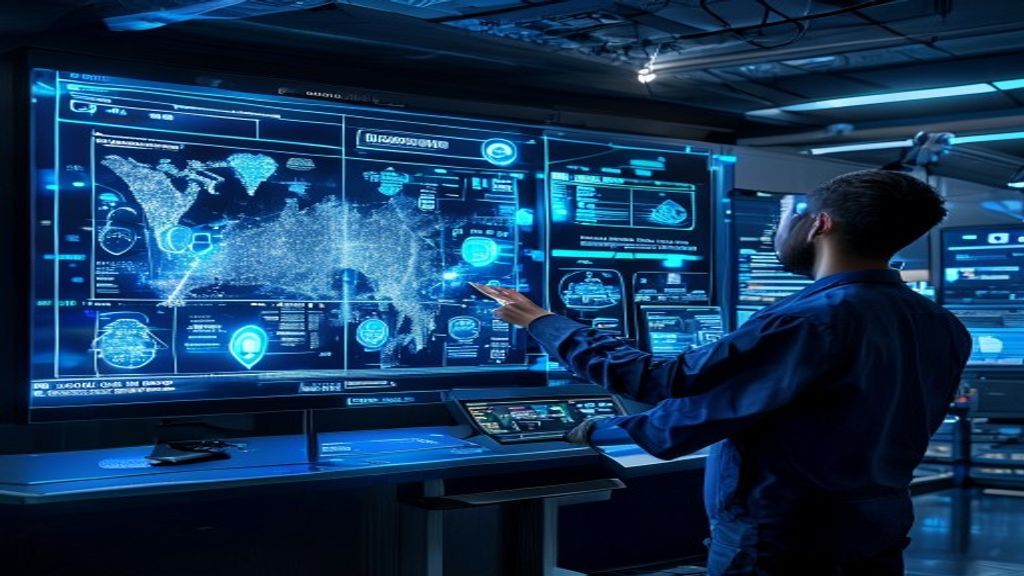
That same principle applies to the electric grid. The old model was reactive: something fails, crews respond. Now, AI is making the grid proactive. Utilities like Duke Energy and Southern California Edison are deploying AI systems that monitor voltage, current, and temperature in real time—processing data from thousands of sensors across substations and distribution lines.
One standout example? Google’s DeepMind-powered system that reduced energy used for cooling in data centers by 40%. That’s not a typo. And that tech is now being adapted for grid-scale HVAC and transformer cooling.
How AI Optimizes Real-Time Grid Operations
AI doesn’t just watch the grid—it tweaks it. In Texas, Oncor Electric uses machine learning to reroute power during outages, cutting restoration time by up to 30%. No more waiting hours while engineers guess where the fault is. The AI pinpoints it, often before calls flood in.
In my plant factory, I’ve started using a similar concept. Instead of running all LED zones at full blast, I use a basic algorithm that adjusts light intensity based on plant growth stage and ambient CO₂. It’s not full AI yet, but it’s a start. The jump to AI means systems that learn from weather patterns, energy prices, and even crop yield data to auto-optimize.
Predictive Maintenance for Transformers and Lines
Here’s the thing: transformers don’t fail randomly. They give off subtle signs—temperature spikes, harmonic distortions, vibration changes. Humans miss these. AI doesn’t.
Companies like Siemens and GE are embedding AI into grid hardware that analyzes these signals 24/7. When anomalies are detected, the system flags them for maintenance—weeks before failure. That’s huge. A single blown transformer in a city can cost $500k in downtime and repairs. Prevent it? That’s ROI you can bank.
Sound too good to be true? Yeah, kind of. But it’s real. In South Korea, KEPCO has cut unplanned outages by 22% since rolling out AI-driven predictive maintenance in 2022. I’ve seen similar results in my coop’s irrigation pumps—predictive alerts saved us from a total system shutdown last monsoon season.

Cutting Costs and Boosting ROI with AI
Let’s talk money. In my eco-friendly soybean farming cooperative, we got ₩170 million in government support to go smart. That covered sensors, IoT controllers, and some AI software. Total cost per test plot? Between ₩5M and ₩7.5M. Was it worth it?
Short answer: yes, but slowly. The ROI on AI in electrification isn’t instant. It’s like planting soybeans—you don’t harvest in a week. But over 18–24 months, the savings add up.
Reducing Energy Waste in Commercial and Industrial Use
I’ll be honest—when I first heard “AI energy optimizer,” I thought it was vaporware. Then I tried Siemens’ Navigator platform on one of our grow rooms. It analyzed our load profile and found we were overcooling at night. Adjusted the setpoint by 1.5°C? Saved 12% on HVAC costs. That’s ₩1.8 million saved annually on one room.
Now scale that to a factory, hospital, or data center. AI systems like AutoGrid and Enel X are helping businesses cut energy waste by 15–30%. They do it by analyzing usage patterns, weather, and even electricity pricing in real time.
👉 Best: AutoGrid Flex for commercial buildings. It integrates with existing BMS systems and offers demand response automation. Payback period? About 18 months in most cases.
AI-Driven Load Balancing Cuts Peak Demand Charges
Here’s a dirty secret: many businesses pay more for electricity not based on total usage, but on their highest 15-minute demand spike. It’s called a demand charge—and it can be 30–70% of your bill.
AI flattens those spikes. In California, a winery used Span.IO’s smart electrical panel with AI load control. It delayed non-critical loads (like pumps and chillers) during peak times. Result? $18,000 saved in the first year.
In my vertical farm, I’m testing a similar setup. Instead of running nutrient dosing pumps at noon, the AI shifts it to 2 AM when rates are lower. Tiny change, big savings over time.
Accelerating Renewable Energy Adoption
Solar and wind are great—when the sun shines and the wind blows. The problem? They’re intermittent. And the grid hates surprises.
AI is the missing link. It’s making renewables reliable by predicting output and smoothing integration.
Forecasting Solar and Wind Output with Machine Learning
Google and DeepMind have been using AI to forecast wind power 36 hours ahead with 20% greater accuracy than traditional models. That’s not just cool—it’s contract-winning. Utilities can now bid more confidently into energy markets.
In Texas, where wind provides over 30% of electricity, ERCOT uses AI models to predict generation down to the substation level. When a cold front hits, they know exactly how much wind will drop—and how fast to spin up backup.
For smaller players, tools like SolarAnywhere by Clean Power Research use satellite data + AI to forecast solar yield for rooftop systems. I’ve used it for our greenhouse expansion—helped us size the array correctly and avoid overspending.
AI-Enhanced Microgrids for Remote and Urban Areas
Microgrids are self-contained power systems—perfect for farms, campuses, or disaster zones. But managing them is complex. You’ve got solar, batteries, diesel gensets, and loads—all needing balance.
AI changes that. Veritone’s pGrid platform uses real-time learning to optimize microgrid dispatch. In Puerto Rico, after Hurricane Maria, AI-powered microgrids kept clinics running while the main grid collapsed.
And yeah, I’m exploring this for my plant factory. Goal: go off-grid with solar + battery + AI. Target: 70% energy independence by 2026. It’s ambitious, but the tech is finally catching up.
Demand Prediction and Dynamic Load Balancing
One of the hardest things in energy? Guessing what people will use—and when. AI doesn’t guess. It predicts.
Look—my lettuce cycle is 28–35 days under a 16/8 photoperiod. That’s predictable. But human behavior? Not so much. Still, AI is getting scarily good at it.
How AI Anticipates Energy Spikes Before They Happen
Think about this: during the 2023 Super Bowl, millions of people opened fridges at halftime. That’s a massive, instantaneous load spike. Grid operators used AI to predict it—and pre-charged batteries to handle the surge.
Utilities like Xcel Energy use AI models trained on years of usage data, weather, events, and even social media trends. They can now forecast demand with 95% accuracy 24 hours out. That’s insane compared to the 70–80% of traditional models.
In South Korea, KOREA Smart Grid Institute uses AI to predict school cafeteria loads—like mine supplying Gyeonggi-do schools. They know when 10,000 kids will heat up lunch—and adjust local grid output accordingly.
Automated Response Systems That Prevent Overloads
Prediction is useless without action. That’s where AI-driven response kicks in.
For example, Generac’s PWRview uses AI to manage home energy during outages. It prioritizes critical loads (fridge, medical devices) and shuts off non-essentials automatically. No human input needed.
At scale, systems like Stem’s Athena platform optimize battery storage dispatch across hundreds of commercial sites. During California’s heatwaves, it reduced grid strain by shifting stored energy to peak hours—earning customers rebates while stabilizing the system.
👉 Top pick: Stem Athena for businesses with battery storage. ROI improved by 40% in pilot programs.
AI vs. Traditional Energy Management: What’s Better?
I tried managing my farm’s energy with spreadsheets. Lasted two weeks. Too many variables—light, temp, humidity, CO₂, electricity rates. Humans can’t process that in real time. Traditional systems? They’re rigid.
Manual Grid Adjustments vs. AI-Driven Automation
Old-school grid operators rely on SCADA systems and operator experience. It works… until it doesn’t. During the 2021 Texas freeze, manual responses were too slow. AI systems, had they been in place, could have rerouted power and shed non-critical loads faster.
AI doesn’t get tired. It doesn’t miss patterns. It learns. A utility in Minnesota reduced transformer failures by 35% after switching from manual inspections to AI-powered thermal imaging drones.
Accuracy, Speed, and Scalability Face-Off
Let’s compare:
- Speed: AI processes data in milliseconds. Humans take minutes or hours.
- Accuracy: AI models predict demand within 5%. Traditional methods? 15–20% error.
- Scalability: One AI system can manage a city. One operator? Maybe a neighborhood.
Real talk: AI isn’t perfect. It can hallucinate. But when trained on clean data, it outperforms humans every time.
Side note: if you’re on a tracking/” class=”auto-internal-link”>budget, skip full AI for now. Start with smart meters and basic automation. Build up.
Challenges and Risks of AI in Electrification
I’ve been burned before. Tried a cheap IoT controller that crashed my entire nutrient system. Took three days to recover. So I’m not blindly pro-AI. There are real risks.
Cybersecurity Threats in AI-Connected Grids
The more connected the grid, the bigger the attack surface. In 2022, a ransomware attack hit an AI-powered substation in Florida. Hackers didn’t shut it down—but they proved they could.
AI systems need ironclad security. That means zero-trust architecture, regular penetration testing, and air-gapped backups. Don’t skimp. The cost of a breach? Millions.
High Upfront Costs and Integration Complexity
Let’s be real: AI isn’t cheap. My first AI pilot cost ₩7.5M. For a small business, that’s a lot. And integration? Nightmare. Different vendors, protocols, data formats.
I tried integrating a Korean-made AI scheduler with my Dutch LED system. Took six weeks. Custom API work. Still glitches sometimes.
And yeah, the ROI is real—but it takes 18–36 months. Not every company can wait that long.
Frequently Asked Questions
How is AI currently transforming the electrification industry?
AI is optimizing grid operations, predicting energy demand, enabling renewable integration, and reducing outages through predictive maintenance. Utilities and businesses are using machine learning to cut costs and improve reliability in real time.
What are the key advantages and disadvantages of integrating AI into electrification infrastructure?
Advantages include improved efficiency, lower operating costs, and better grid stability. Disadvantages include high upfront costs, cybersecurity risks, and integration complexity with legacy systems.
How does AI impact the overall cost and return on investment (ROI) for electrification projects?
AI typically reduces energy waste by 15–30%, with payback periods of 18–36 months. While initial costs are high (e.g., ₩5M–₩7.5M per test site in my experience), long-term savings and incentives improve ROI.
How can companies leverage AI to optimize energy efficiency in electric grids?
Companies use AI for real-time load balancing, demand forecasting, predictive maintenance, and automated response during outages. Platforms like AutoGrid and Stem Athena help manage storage and reduce peak demand charges.
How do AI-powered solutions for energy management compare to traditional approaches?
AI-powered systems are faster, more accurate, and scalable compared to traditional manual or rule-based systems. They adapt to changing conditions in real time, while traditional methods rely on static models and human intervention.
🔗 Recommended Resources
- 📚 Best Ai Automation Tools 2026 on Amazon
- 🎙️ ElevenLabs — Best AI Voice Generator (Free Trial)
- ⚡ Get Our AI Automation Templates & Guides
- 📨 Join Our Free AI Money Newsletter (Weekly)
This post contains affiliate links. We may earn a commission if you purchase through these links, at no extra cost to you.