
Key Takeaways
- Audit your AI tool usage for energy efficiency
- Consider smaller, local models over cloud APIs
- Push providers to disclose energy use per query
- Support policies for green data center development
- Monitor your utility’s grid load reports
Why AI Is Straining America’s Power Grid Right Now
Let’s cut through the noise: AI is straining America’s power grid right now because the infrastructure wasn’t built for this kind of load. Think about it — the U.S. power grid is already aging. The average transformer is over 40 years old. Transmission lines are creaking. And now, out of nowhere, we’ve got companies like Microsoft, Google, and Amazon rushing to build AI data centers in places like Loudoun County, Virginia — the so-called ‘Data Center Alley’ — and they’re asking for more power than entire cities.
Back in 2022, Dominion Energy told Virginia regulators it couldn’t keep up with data center demand. By 2023, they’d paused new connections in Northern Virginia. Why? Because AI is straining America’s power grid right now — and they’re maxed out.
The Rise of the AI Data Center Boom
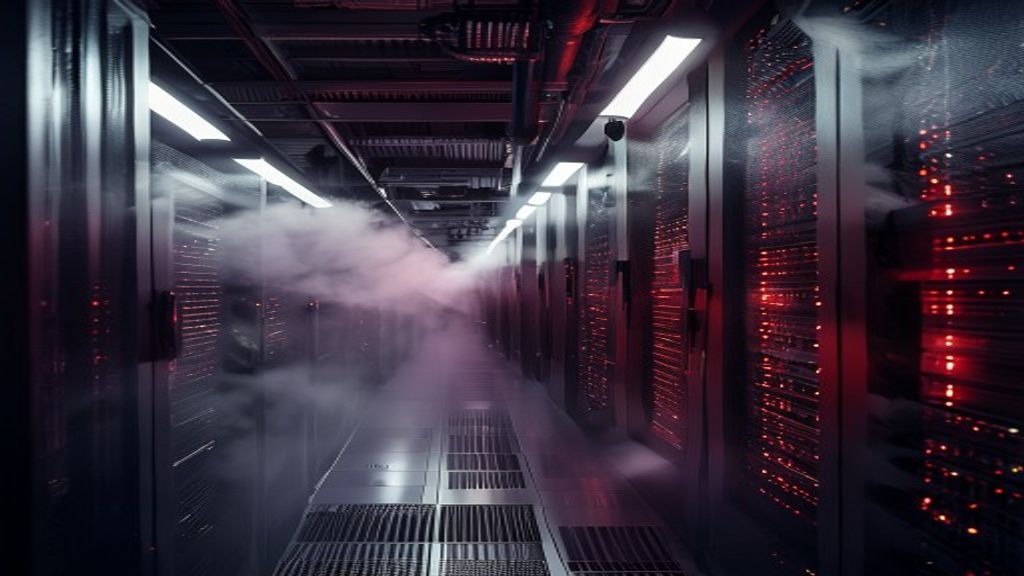
It’s not just that we’re building more data centers. It’s that the new ones are way more power-hungry. A traditional cloud data center might use 50-100 megawatts (MW). An AI-focused one? Easily 300-500 MW. That’s enough to power 250,000 homes.
Take Nvidia. Their H100 GPUs — the workhorses of modern AI — draw up to 700 watts each. A single server rack can have 20 of them. That’s 14,000 watts per rack. Multiply that by thousands of racks, and you’ve got a power plant’s worth of demand.
How Much Power Does AI Actually Use?
Estimates vary, but a 2023 paper from the University of Massachusetts found that training a single large AI model like GPT-3 can emit as much carbon as five cars over their entire lifetimes. And that was in 2020. Models today are exponentially bigger.
We don’t have precise national numbers, but analysts at Goldman Sachs estimate AI could increase U.S. electricity demand by 160 terawatt-hours by 2030 — that’s about 4% of total current usage. And most of that growth? It’s coming from data centers.

How AI Is Straining America’s Power Grid Right Now: The Mechanics
So how exactly does AI is straining America’s power grid right now work? It’s not just about running code. It’s about physics, heat, and infrastructure.
GPUs Run Hot — Really Hot
AI workloads aren’t like browsing Facebook or streaming Netflix. They’re compute-intensive, running complex matrix multiplications 24/7. That means GPUs are pushed to their limits — and they generate insane heat.
In my plant factory, I use LED lights that run hot. But at least they’re spread out. In a data center, you’ve got thousands of GPUs packed into tight racks. One H100 can hit 80°C under load. If you don’t cool them, they melt. Or worse, fail mid-inference.
Cooling Is Where the Real Power Goes
Here’s the kicker: up to 40% of a data center’s energy isn’t for computing — it’s for cooling. Liquid cooling, chillers, massive HVAC systems. All of it sucking down power.
Sound familiar? It should. In my vertical farm, HVAC and dehumidification eat up about 45% of my energy bill. Lighting’s the other 50%. Only 5% goes to sensors and automation. So when I hear about data centers using half their power on cooling, I get it. It’s the same damn problem — just at a planetary scale.
AI Training vs. Inference: The Hidden Load
Most people think AI power use is all about training models. But inference — actually using AI, like asking ChatGPT a question — is becoming a bigger issue.
Every time you type a prompt, that request hits a server, fires up GPUs, processes tokens, and sends back text. Multiply that by millions of users daily, and inference starts to rival training in energy cost. Google reported in 2023 that serving AI queries was becoming a ‘material’ load on their systems.
And unlike training, which happens in bursts, inference is constant. It never sleeps. So the grid strain? It’s 24/7.
Is AI Is Straining America’s Power Grid Right Now Worth It?
I’ll be honest — I’ve been wrong about tech trends before. I thought cryptocurrency mining was a flash in the pan. I was wrong. Same with NFTs — I underestimated the hype cycle. But this time, I’m skeptical. Is AI is straining America’s power grid right now really worth it?
What Are We Gaining From This Power Burn?
On one hand, AI is doing incredible things. Drug discovery. Climate modeling. Crop yield optimization — yeah, I’m using AI to predict harvest times in my plant factory. It’s helping me reduce waste and energy use.
But let’s be real: most AI usage right now is for ads, content generation, and chatbots that can’t even spell ‘customer service’ correctly. Are we burning enough electricity to power Nebraska for a month just so LinkedIn influencers can auto-generate ‘thought leadership’ posts?
Some gains are real. But the ROI? Feels unbalanced.
The Environmental Cost of AI Progress
And then there’s the carbon cost. Sure, companies claim their data centers are ‘green.’ Google says it’s carbon-neutral. Microsoft promises carbon-negative by 2030.
But offsetting isn’t the same as reducing. If you’re building a data center in Virginia that draws 400 MW from a grid still powered by natural gas, you’re not ‘green’ — you’re just buying credits.
Real talk: AI is straining America’s power grid right now and we’re not building enough renewable capacity to keep up. Solar and wind are growing, but slowly. Transmission bottlenecks are real. And AI isn’t waiting.
Best AI Is Straining America’s Power Grid Right Now Options
Okay, let’s get specific. Not all AI is created equal when it comes to power strain. Some applications are absolute monsters.
Top Energy-Hogging AI Applications
- Large Language Models (LLMs) — GPT-4, Claude, Gemini. These are the worst offenders. Training them can take weeks on thousands of GPUs.
- AI Video Generation — Runway, Sora, Pika. Generating a single minute of video can take as much energy as charging 100 smartphones.
- Autonomous Driving Simulations — Tesla, Waymo. Running endless virtual miles in AI simulators eats power fast.
And let’s not forget crypto AI hybrids — like AI-powered trading bots running 24/7 on blockchain networks. Yeah, that’s a thing now.
Who’s Building the Most Power-Hungry Models?
Nvidia’s the engine under the hood, but the big spenders are Microsoft (OpenAI), Google (DeepMind), and Meta (Llama). Amazon’s catching up fast with their Trainium chips.
👉 Best overall: OpenAI’s GPT-4. It’s the most advanced — and one of the most energy-intensive. Estimates suggest a single query uses about 0.003 kWh. Sounds small? Multiply by 100 million daily users.
👉 Budget option: Meta’s Llama 3. It’s open-source, runs on less powerful hardware, and can be fine-tuned locally. Less strain, more control.
👉 Premium choice: Google’s Gemini Ultra. Built for enterprise, runs on custom TPUs, and is optimized for efficiency — but still demands massive infrastructure.
How Much Does AI Is Straining America’s Power Grid Right Now Cost?
Let’s talk money. Because AI is straining America’s power grid right now isn’t just an engineering problem — it’s a financial one.
Data Center Energy Bills: Millions Per Month
A 100 MW data center pays about $10 million a year in electricity at $0.11/kWh. But AI centers? A 500 MW facility could be paying $50M+ annually. Some are negotiating directly with power plants. Others are building their own solar farms — like Amazon’s 1.6 GW solar push.
But here’s the catch: those costs get passed on. Either through higher cloud computing prices… or through your electric bill.
Taxpayers and Ratepayers Are Footing the Bill
In Virginia, data centers get tax breaks. In Texas, they get special rate deals. Who covers the gap? You do. Through higher infrastructure costs, grid upgrades, and delayed renewable projects.
And don’t think this won’t hit your wallet. If utilities need to build new substations or upgrade lines, that cost gets rolled into rates. My electricity in Korea? Around ₩120/kWh. In California, it’s over $0.30/kWh. AI is making it worse.
Alternatives and the Path Forward
So what’s the fix? Do we just stop building AI? No. But we need to get smarter.
Efficiency Gains: Are They Enough?
Nvidia’s next-gen Blackwell GPU claims 25% better efficiency. Google’s TPUs are optimized for AI workloads. And techniques like model quantization and pruning can reduce compute needs.
But here’s the problem: efficiency gains are being outpaced by demand. We’re getting better at using less power per computation — but we’re doing so many more computations that it doesn’t matter.
It’s like buying a fuel-efficient car but driving it 20,000 extra miles a year. Net gain? Zero.
What If We Just Built Smarter?
In my plant factory, I’m testing AI that only turns on lights when crops actually need them — not on a fixed schedule. Saves 15% on energy. Small win, but real.
What if AI data centers did the same? Dynamic load balancing. Off-peak training. Edge computing to reduce server trips.
Some companies are trying. Microsoft’s experimenting with underwater data centers. Google’s using AI to optimize cooling. But it’s not widespread.
And here’s a wild idea: what if we charged more for high-energy AI queries? Like a carbon tax for compute? You want to generate a 5-minute AI video? Pay a premium. Make users aware of the cost.
Sound too good to be true? Yeah, kind of.
Frequently Asked Questions
What is AI is straining America’s power grid right now?
“AI is straining America’s power grid right now” refers to the rapid increase in electricity demand caused by AI data centers, which require massive power for computing and cooling. This surge is overwhelming local grids, especially in tech hubs like Northern Virginia.
How does AI is straining America’s power grid right now work?
AI models require thousands of high-power GPUs running 24/7, generating intense heat. Data centers use nearly as much energy for cooling as they do for computation, creating a constant, high-load demand that existing infrastructure wasn’t designed to handle.
Is AI is straining America’s power grid right now worth it?
Some AI applications, like medical research and climate modeling, offer real value. But much of today’s AI use — such as ad targeting and content generation — may not justify the environmental and infrastructural costs. The balance is still tilted toward overuse.
How much does AI is straining America’s power grid right now cost?
A single large AI data center can spend $50 million or more on electricity annually. These costs are passed to consumers through higher utility rates, infrastructure taxes, and cloud service pricing.
What are alternatives to AI is straining America’s power grid right now?
Alternatives include using smaller, more efficient models, running AI workloads during off-peak hours, investing in edge computing, and applying energy-aware pricing. Renewable integration and grid modernization are also critical long-term solutions.
🔗 Recommended Resources
- 📚 Best Ai Automation Tools 2026 on Amazon
- 🎙️ ElevenLabs — Best AI Voice Generator (Free Trial)
- ⚡ Get Our AI Automation Templates & Guides
- 📨 Join Our Free AI Money Newsletter (Weekly)
This post contains affiliate links. We may earn a commission if you purchase through these links, at no extra cost to you.