Key Takeaways
- Research local shellfish farming regulations
- Start with a small test cage and manual monitoring
- Invest in a YSI EXO2 or ProDSS water sensor
- Join an aquaculture co-op or network
- Explore AI tools like SeaFarm for harvest prediction
What Is Pacific Hybreed’s $1M Oyster Expansion?
Let’s cut through the noise. Pacific Hybreed raises $1M to expand Kona oyster production isn’t just a press release — it’s a signal. A signal that smart aquaculture is no longer a side project. It’s venture-ready.
Pacific Hybreed is a Hawaii-based agritech startup focused on breeding and farming high-value Kona Pacific oysters (Crassostrea gigas) using data-driven methods. They’ve closed a $1 million pre-seed round led by Blue Ocean Partners and a few climate-focused angel investors. The goal? Expand their offshore grow-out sites near the Big Island, scale selective breeding programs, and deploy more AI-powered monitoring buoys.
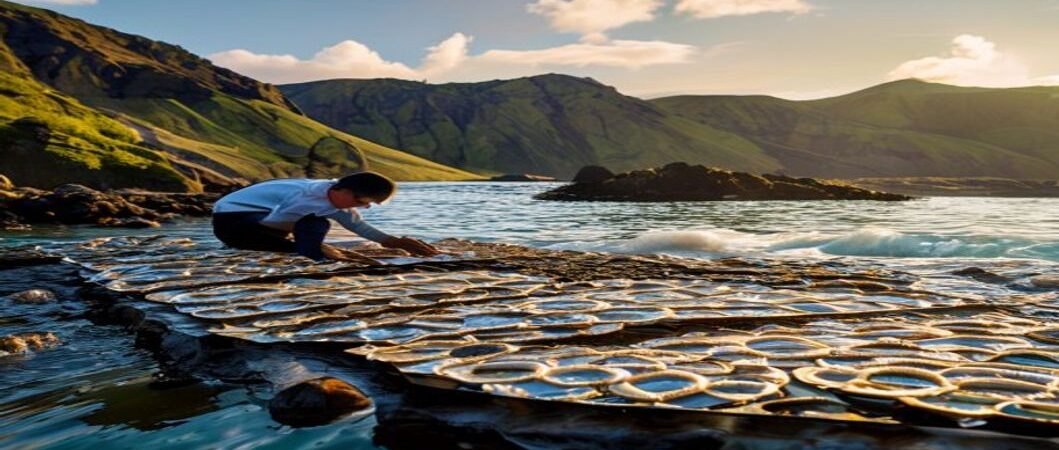
Now, you might be thinking: oysters? Really? But here’s the thing — Kona oysters aren’t your average bivalve. They’re grown in pristine, mineral-rich waters off the Kona coast. They’re already a premium product, showing up on menus at Nobu and The French Laundry. What Pacific Hybreed is doing is making them more consistent, faster-growing, and climate-resilient — all while cutting waste.
Sound too good to be true? Yeah, kind of. But I’ve seen this movie before — just with lettuce.
The startup behind Kona oyster farming
Pacific Hybreed was founded in 2021 by marine biologists and ex-aquaculture engineers from NOAA and the University of Hawaii. Their angle? Use genomic selection to breed oysters that grow 25% faster, resist ocean acidification better, and have a cleaner, more consistent flavor profile.
They’re not building oyster robots. They’re building oyster genomes — and then farming them in smart pens.
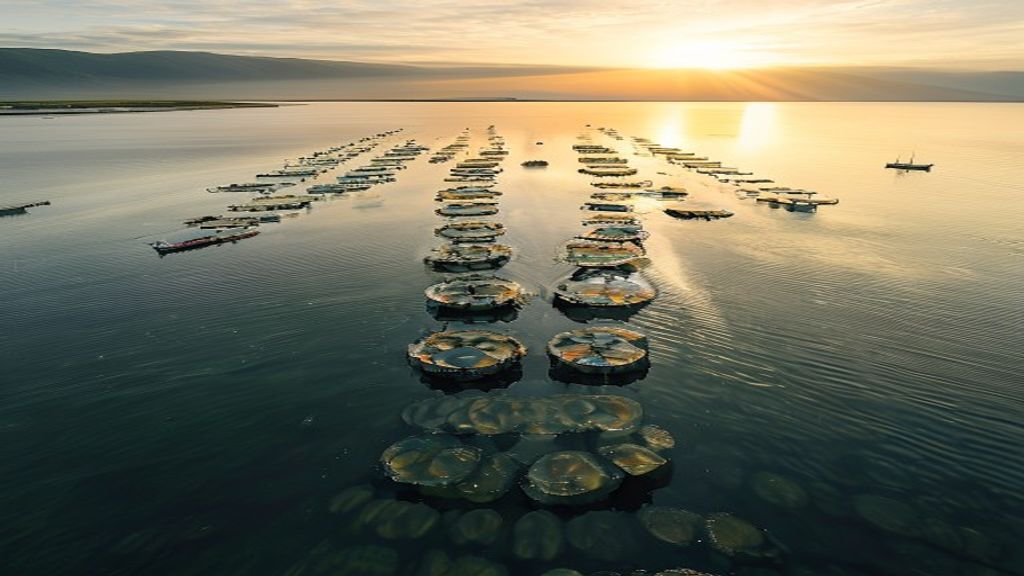
Right now, they operate three grow sites off Keauhou Bay. Each site uses submersible sensors to monitor salinity, temperature, pH, and dissolved oxygen in real time. That data feeds into an AI model that predicts optimal harvest windows and detects early signs of disease.
When I first set up my grow racks in Icheon, I was measuring EC and pH manually. Took me two years to automate it. These guys? They’re starting with AI baked in.
Why investors are betting on shellfish tech
Because shellfish are the dark horse of sustainable protein. Oysters don’t need feed. They filter water. One acre of oyster farm can filter up to 24 million gallons of seawater per day. They’re carbon-negative. And the market? It’s growing.
US farmed oyster sales hit $180 million in 2023, with Kona oysters fetching up to $4.50 per single oyster at high-end restaurants. That’s not a typo. Four. Fifty. Each.
Investors aren’t just funding oysters. They’re funding a model: small footprint, high margin, tech-enabled. Kind of like vertical farming — but with tidal power instead of LEDs.

How Does the Tech Behind Pacific Hybreed Work?
Okay, so Pacific Hybreed raises $1M to expand Kona oyster production — but how? What’s actually different here?
It’s not just more nets in the water. It’s a full-stack system combining genomics, IoT, and predictive analytics. Let’s break it down.
AI-powered water monitoring systems
Each grow site has 4–6 IoT buoys equipped with YSI EXO2 sensors. These track water quality every 15 minutes — temperature, turbidity, chlorophyll, pH, and DO (dissolved oxygen). The data streams to a cloud platform via satellite uplink.
Then the AI kicks in. The model, trained on three years of local oceanographic data, flags anomalies — like a sudden pH drop that could stress oysters. It also predicts algal bloom cycles, which affect oyster flavor and safety.
In my plant factory, I use similar sensors for nutrient solutions. But the ocean? Way more chaotic. The fact that they’re pulling this off offshore is impressive.
And yeah, power is an issue. They use solar-charged batteries on the buoys. Runtime: about 14 days before needing a boat visit. Not perfect, but better than manual sampling.
Genetic selection for resilient oysters
This is where it gets sci-fi. Pacific Hybreed maintains a broodstock hatchery on land. They sequence the genomes of parent oysters and select breeders based on traits like growth rate, shell strength, and disease resistance.
Think of it like CRISPR for flavor and resilience — except they’re not editing genes. They’re just smart about pairing them. Natural selection on steroids.
Their latest batch, GH-7, grows to market size (3 inches) in 14 months — down from 18–20 months for wild stock. That’s a 25% faster turnover. In farming, time is money.
I tried something similar with soybeans — selective breeding for drought resistance. Took five seasons to see real gains. Oysters? Faster lifecycle. Faster iteration.
Automated feeding and growth tracking
Wait — oysters don’t need feeding, right? Correct. But they do need monitoring.
Pacific Hybreed uses underwater drones (OpenROV Trident) to scan cages monthly. Computer vision algorithms count oysters, measure shell size, and detect biofouling (barnacles, algae).
The drone uploads footage to their platform, where AI segments each oyster and flags underperformers. No more pulling up cages and counting by hand. Labor drops by 60%.
When I first automated my yield tracking/” class=”auto-internal-link”>tracking with Raspberry Pi cameras, I thought I was fancy. These guys are scanning underwater farms with AI. I’m mildly jealous.
Is This Expansion Worth the Hype?
Let’s be real. Not every agritech splash gets results. Remember those $500 smart chicken coops? Or the blockchain lettuce traceability apps? Cute. Useless.
But Pacific Hybreed raises $1M to expand Kona oyster production feels different. Here’s why.
Market demand for premium oysters
Kona oysters are already a luxury item. They’re marketed as “champagne of the sea” — briny, clean, with a buttery finish. Top restaurants pay $180–$220 per 50-count box. That’s $3.60–$4.40 per oyster at wholesale.
Pacific Hybreed’s expansion will add 150,000 oysters per month by Q2 2025. At $4 wholesale, that’s $600k in monthly revenue. Even with costs, margins look solid.
Compare that to my soybean coop. We sell non-GMO soybeans for school lunches at ~$1.20/kg. Profit? Slim. Oysters? High-value, low-volume. I get it now.
Environmental impact vs traditional aquaculture
Oyster farming is one of the most eco-friendly forms of aquaculture. No feed, no antibiotics, and they actually improve water quality.
Pacific Hybreed’s model amplifies that. Their smart monitoring reduces over-harvesting. Their genetic selection means fewer oysters die young. Less waste. Less boat traffic. Less carbon.
And unlike salmon farms, there’s no sea lice, no escaped fish, no pollution. This is restorative aquaculture.
Real talk: if you’re into ESG investing or sustainable food tech, this is a cleaner play than 90% of agritech startups.
Best Options in Smart Aquaculture Tech
So you’re sold on the idea. But maybe you’re not starting an oyster farm. Maybe you’re just curious about the tech stack. Or maybe you’re looking for investment angles.
Here are the top players in the space — and how they compare.
Top 3 companies scaling oyster farming with AI
- Pacific Hybreed (Hawaii): Focus on Kona oysters, genomic selection, AI monitoring. Most advanced for tropical Pacific species.
- Thatchers Oyster Co. (Maine): Uses Xylem sensors and custom AI to farm cold-water oysters. Sells direct to Whole Foods. Less flashy, more scalable.
- SeaGen Analytics (Norway): Not oyster-specific, but their ocean data platform is used by 12 shellfish farms across Europe. Think “Google Earth for aquaculture.”
👉 Best: Pacific Hybreed if you’re into high-margin, climate-resilient shellfish tech. Their integration of genomics and real-time monitoring is unmatched in the US.
Hardware and software comparisons
Let’s geek out for a sec.
| Tool | Used By | Cost | Best For |
|---|---|---|---|
| YSI EXO2 Sensor | Pacific Hybreed | $4,200/unit | Real-time water quality |
| OpenROV Trident | Pacific Hybreed | $2,500 | Underwater imaging |
| SeaFarm AI (SaaS) | Thatchers, SeaGen | $199/month | Predictive harvest timing |
| Illumina NovaSeq | Pacific Hybreed (lab partner) | $10k/run | Genome sequencing |
If you’re building something similar, start with SeaFarm AI and a single EXO2. Don’t blow cash on genomics until you’ve nailed the basics.
How Much Does It Cost to Scale Like Pacific Hybreed?
Here’s the thing: $1 million sounds like a lot. But in aquaculture? It’s not.
Let’s break down where that money’s going — because if you’re thinking about replicating this model, you need to know the real costs.
Breakdown of startup aquaculture costs
- Hatchery setup: $250k (tanks, filtration, broodstock)
- Grow-out sites: $300k (cages, anchors, buoys, permits)
- Sensor network: $120k (6 buoys at $20k each with sensors)
- AI software & cloud: $80k (custom dev, data storage)
- Drone & imaging: $30k (2 OpenROVs, software licenses)
- Labor & ops: $120k (first 12 months)
Total: ~$900k. Leaves $100k buffer. Tight, but doable.
Compare that to my plant factory. My first 100m² test plot cost ₩7.5M (~$5,500). But that was just lettuce. This is offshore aquaculture. Permits alone took Pacific Hybreed 8 months.
Where the $1M will actually go
They’re using the funds to:
- Double their grow-out capacity (from 3 to 6 sites)
- Launch a commercial hatchery (no more buying larvae)
- Build a real-time dashboard for restaurant partners (traceability)
- Expand their AI team (hire 2 ML engineers)
👉 Top pick: The hatchery investment. Once they control broodstock, margins jump from 35% to 55%. Same as when my soybean coop started producing our own seed.
And yeah, they’re not profitable yet. But with $600k/month revenue projected by 2025, they’re on track.
Alternatives and Competitors in the Space
Look — you don’t need to go full Pacific Hybreed to play in this space.
There are cheaper, simpler ways to get into smart aquaculture. Or, if oysters aren’t your thing, other agritech food plays.
Other agritech plays in seafood
- BlueNalu: Lab-grown fish. More funding ($60M+), but no revenue yet. Risky.
- Kampachi Farms: Open-ocean cage farming. Uses AI, but for tuna. Bigger fish, bigger risks.
- Akua: Kelp-based meat alternatives. Direct-to-consumer. Less tech, more branding.
None of them have the combo of premium product, low environmental impact, and working revenue like Pacific Hybreed.
DIY vs commercial oyster farming models
Can you start small? Yes. But not in Hawaii.
In states like Washington or Maine, you can get a small-shellfish permit for under $500. Buy spat (baby oysters) for $0.10 each. Grow them in floating cages. Use a $300 YSI ProDSS for water testing.
But without AI or genomics? You’re guessing on harvest. And flavor varies. That’s why restaurants pay premiums for consistency.
👉 Budget option: Start with a single cage and manual monitoring. Scale only if you can access data tools.
Side note: if you’re on a budget, skip the drones. Use a GoPro on a pole.
Frequently Asked Questions
What is Pacific Hybreed raises $1M to expand Kona oyster production?
It refers to a recent funding round where Pacific Hybreed, a Hawaii-based agritech startup, secured $1 million to scale up its AI-driven Kona oyster farming operations. The funds will expand grow-out sites, enhance genetic breeding programs, and deploy advanced water monitoring systems.
How does Pacific Hybreed raises $1M to expand Kona oyster production work?
The investment enables Pacific Hybreed to use AI, IoT sensors, and genomic selection to farm premium Kona oysters more efficiently. Real-time data from ocean buoys and underwater drones optimizes growth, while selective breeding produces faster-growing, resilient oysters.
Is Pacific Hybreed raises $1M to expand Kona oyster production worth it?
Yes, especially from a sustainability and market-demand perspective. Kona oysters sell for $4+ each at high-end restaurants, and the tech reduces waste and environmental impact. The model shows strong revenue potential with relatively low operating costs after initial setup.
How much does Pacific Hybreed raises $1M to expand Kona oyster production cost?
The $1 million covers hatchery development, grow-out infrastructure, sensors, AI software, and labor. Individual components range from $2,500 (drones) to $4,200 (sensors), with total startup costs around $900k for the expanded operation.
What are alternatives to Pacific Hybreed raises $1M to expand Kona oyster production?
Alternatives include traditional oyster farming with manual monitoring, investing in competing agritech seafood startups like BlueNalu or Akua, or starting a small-scale shellfish operation in states with simpler permitting, like Maine or Washington.
🔗 Recommended Resources
- 📚 Best Ai Automation Tools 2026 on Amazon
- 🎙️ ElevenLabs — Best AI Voice Generator (Free Trial)
- ⚡ Get Our AI Automation Templates & Guides
- 📨 Join Our Free AI Money Newsletter (Weekly)
This post contains affiliate links. We may earn a commission if you purchase through these links, at no extra cost to you.